Garden Up Potting Mix !!
How to Prepare Potting Soil for Indoor Plants | Garden Up
|ITEM LINKS|Cocopeat: https://amzn.to/2OutUKmCompost: https://amzn.to/2MKleiKPerlite: https://amzn.to/2vICWMXReady made complete soil: https://amzn.to/2S3ckD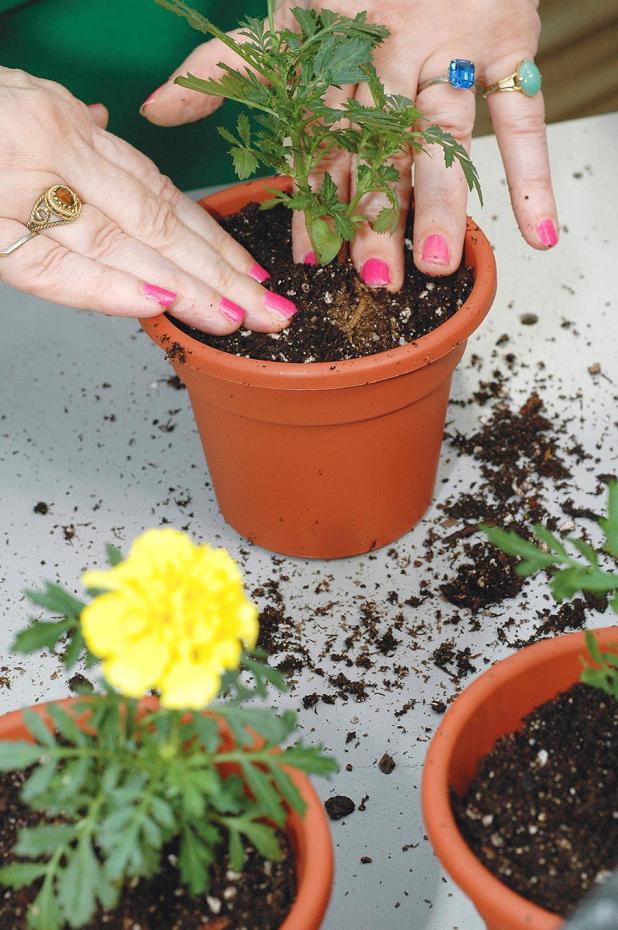
DIY Potting Soil: 6 Homemade Potting Mix Recipes for the Garden
Potting soil, also called potting mix, is a soilless blend of ingredients used to grow plants. Whether you’re starting seeds, rooting cuttings, potting up houseplants, or growing patio containers and hanging baskets, potting soil is the ideal growing medium for containerized plants. This post may contain affiliate links. If you click on an affiliate link and make a purchase, we receive a small commission at no extra cost to you. Find our full disclosure here.I’m a huge fan of container gardening, and I know I’m not alone. Urban and small-space gardening is on the rise, houseplants are strutting their stuff all over Instagram, and few people have the time and energy to dedicate to a large in-ground garden these days. But with hundreds of seedlings to start and over 50 large pots to fill each season, my container gardening habit used to come with a hefty price tag. When I started making my own DIY potting soil, however, I cut my container gardening budget by two-thirds! Here’s how I make homemade potting mix for all of my containers, houseplants, and seed-starting needs.
Before I introduce my favorite DIY potting soil recipes, let’s talk about what potting soil actually is. The most important thing to understand about potting soil is that it doesn’t actually contain real soil. Potting soil, also called potting mix, is a soilless blend of ingredients used to grow plants. Whether you’re starting seeds, rooting cuttings, potting up houseplants, or growing patio containers and hanging baskets, potting soil is the ideal growing medium for containerized plants. All good-quality potting mixes, including homemade potting soils, have a few things in common.
Like commercial potting soils, you can make many different DIY potting soil blends, each with a different texture, nutritional content, density, and water-holding capacity, all matched to the needs of your plants. Carefully select the ingredients you use and combine them in the correct ratios to tailor each DIY potting soil you make for the specific needs of each plant you’re growing.
The primary ingredient in most potting soils is sphagnum peat moss. A very stable material, peat takes a long time to breakdown and is widely available and inexpensive. It bulks up potting mixes without adding a lot of weight, and once wet, it holds water fairly well.
Sphagnum peat moss is well-draining and well-aerated, but it’s very low in available nutrients and it has an acidic pH, typically ranging between 3.5 and 4.5. Limestone is added to peat-based potting mixes to help balance the pH. I use bales of Premier brand peat moss for my homemade potting soil, blended with crushed limestone at a rate of 1/4 cup lime for every 6 gallons of peat moss.
A by-product of the coconut industry, coir looks and acts a lot like sphagnum peat moss in both commercial and DIY potting soil blends. It has more nutrients than peat moss and lasts even longer, but it’s more expensive to purchase. Coir fiber’s pH is close to neutral.
Often sold in compressed bricks, coir fiber is considered by many to be more sustainable than sphagnum peat moss. BotaniCare is one available brand of compressed coir fiber.
Perlite is a mined, volcanic rock. When it’s heated, it expands, making perlite particles look like small, white balls of Styrofoam. Perlite is a lightweight, sterile addition to bagged and homemade potting mixes.
It holds three to four times its weight in water, increases pore space, and improves drainage. With a neutral pH, perlite is easy to find at nurseries and garden centers. One popular brand of perlite is Espoma perlite.
Vermiculite is a mined mineral that is conditioned by heating until it expands into light particles. It’s used to increase the porosity of commercial and DIY potting soil mixes. In potting soil, vermiculite also adds calcium and magnesium, and increases the mix’s water-holding capacity.
Though asbestos contamination was once a concern with vermiculite, mines are now regulated and regularly tested. Organic bagged vermiculite is my favorite source.
Coarse sand improves drainage and adds weight to potting mixes. Mixes formulated for cacti and other succulents tend to have a higher percentage of coarse sand in their composition to ensure ample drainage.
Add pulverized calcitic limestone or dolomitic limestone to peat-based potting soils to neutralize their pH. Use about 1/4 cup for every 6 gallons of peat moss. These minerals are mined from natural deposits and are readily available and inexpensive. Jobe’s is a good brand of lime for use in DIY potting soil.
Add fertilizers to peat-based potting soils because these mixes don’t naturally contain enough nutrients to support optimum plant growth. A good DIY potting soil recipe includes a natural fertilizer, derived from a combination of mined minerals, animal by-products, plant materials, or manures, rather than a fertilizer that’s comprised of synthetic chemicals.
I use a combination of several natural fertilizer sources for my homemade potting mixes. Sometimes I add a commercially-made, complete organic granular fertilizer, such as Dr. Earth or Plant-Tone, and other times I blend my own fertilizer from cottonseed meal, bone meal, and other ingredients (my favorite fertilizer recipe is provided below).
Composted wood chips lighten up potting mixes by increasing the pore sizes, and allowing air and water to travel freely in the mix. They’re slow to breakdown but may rob nitrogen from the soil as they do, so the addition of a small amount of blood meal or alfalfa meal is necessary when using composted wood chips as an ingredient in DIY potting soil recipes. Use composted wood chips in potting mixes designed for potted perennials and shrubs. To make your own, get a load of wood chips from an arborist and let them compost for a year, turning the pile every few weeks.
Containing billions of beneficial microbes, and with superior water-holding capacity and nutrient content, compost is an excellent addition to DIY potting soil. Because it plays such a huge role in promoting healthy plant growth, I use it in all of my general homemade potting soil recipes. But, I don’t include it in recipes for seed-starting as it’s too heavy for young seedlings. I use leaf compost from a local landscape supply yard, but bagged compost from Dr. Earth Compost or Coast of Maine are other favorites.
Good quality, DIY potting soil should be light and fluffy, with a well-blended mixture of ingredients. When it’s dried out, it does not shrink significantly or pull away from the sides of the container.
Mixing your own potting soil blend is easy, and it means you have complete control of one of the most critical steps in the growing process. For container gardeners, a high-quality potting soil is a must. Making your own potting soil allows you to better cater to the needs of your plants. The results are more stable and consistent, and you save a ton of money.
The following DIY potting soil recipes use a combination of the ingredients I listed above. Mix large volumes of homemade potting soil in a cement mixer or a spinning compost tumbler. To make smaller quantities, blend the ingredients in a wheelbarrow, mortar mixing tub, or a large bucket. Be sure to mix everything thoroughly to ensure a consistent result.
6 gallons sphagnum peat moss or coir fiber4.5 gallons perlite6 gallons compost1/4 cup lime (if using peat moss)1 & 1/2 cup of the DIY container fertilizer blend found below OR 1 & 1/2 cups of any granular, complete, organic fertilizer.
3 gallons compost2.5 gallons coarse sand3 gallons sphagnum peat moss or coir fiber2.5 gallons composted pine bark3 gallons perlite2 TBSP of lime (if using peat moss)1 cup granular, organic fertilizer (or 1 cup of the DIY container fertilizer blend found above)1/4 cup organic cottonseed meal, if growing acid-loving trees and shrubs
3 gallons sphagnum peat moss or coir fiber1 gallon perlite1 gallon vermiculite2 gallons coarse sand2 TBSP lime (if using peat moss)
2 gallons sphagnum peat moss or coir fiber2 gallons vermiculite1 gallon finely screened compost3 TBSP lime (if using peat moss)2 TBSP granular, organic fertilizer (or 2 TBSP of the DIY container fertilizer blend found above)
2 gallons sphagnum peat moss or coir fiber1.5 gallons perlite2 cups coarse sand3 TBSP lime (if using peat moss)2 TBSP granular, organic fertilizer (or 2 TBSP of the DIY container fertilizer blend found above)
When making DIY potting soil, use the batch as quickly as possible. But if storage is necessary, place the mix in sealed plastic bags in a cool, dry place.
For more on how to garden successfully in containers, check out my book, Container Gardening Complete (Cool Springs Press, 2017).
Great potting soil mixes. I am a huge DIY gardener and always love to see what everyone does too. I think you have list bone meal twice in a recipe..not sure if you meant blood meal..under DIY container fertilizer blend
Thanks, Jeremy. Good catch on the listing of bone meal twice. The second one should be kelp meal. I fixed it now. Thanks for the heads up on the typo.
Jessica, I purchased the coir you linked – it came in sheets. Do you shred it dry or wet it, then shred? Thanks!
The video didn’t show you adding any lime, however, the recipe in the article mentioned limestone. Do you add that in your cart?I am planting lots of vegetables in felt bags this year. I find Miracle Grow potting mix too expensive to fill them all. Do you have a recipe for felt bag soil mix or do you think I need more or less of a certain ingredient for the felt bag growing method?
The general potting mix here will work for fabric planter bags. In the video I didn’t add lime because the fertilizer I added to my pots that year contained lime. But if I’m mixing straight, yes, I always add lime.
I am trying a floating lake garden, in bags over PVC pipe for irrigation and a screen overhead this year and also some bags on the beach (which gets 1/2 the sun time). Hope the mixes work.
You use a lot of coarse sand for your soil mixes. I find it hard to get. There is play sand, construction sand etc. but coarse sand is not available in stores I went to. It is of course available on Ebay and Amazon but expensive. Any suggestions?
Thanks for the post! Just a quick note: Sphagnum mosses or “peat mosses” are living mosses that are often found growing on the surfaces of wetlands called “peatlands” or “mires”. In contrast, ‘peat’ refers to dead, partially-decayed plant remains (often including the remains of Sphagnum mosses) that accumulate in waterlogged ecosystems such as peatlands. Peat is thus a form of organic soil. However, the process of peat generation and accumulation is very slow (only 0.5 – 1 mm per year) and represents a significant source of carbon storage on a global scale. While peat harvest is not sustainable, best practices do exist for the harvest of peat mosses (meaning that the moss can regenerate following harvest). So, if one has a choice, it’s best to buy products containing Sphagnum moss but not Sphagnum peat. Cheers!
Thank you for making small recipes for potting soils, I have a small flower garden so this will be perfect. Can’t find construction sand, it’s hard to find.what stores carry this sand? & large bags of perlite& vermilite.
Hi Lorraine – Most hardware stores carry coarse builder’s sand in 50 pound bags. A farm or feed shop or plant nursery should have large bags of perlite and vermiculite.
Thanks for this post Jessica! I love the fact that you provided specialized recipes depending on what you’re planning. One thing that would make this even more complete is a recipe for in-ground planting. I know some people might use a potting mix to amend their soil when planting a shrub or perennial, but one of my local garden centers has an awesome planting mix specifically for in-ground and I’d like to find a way to copy it but I’m not sure what the ingredients are …. and if it’s really all that different from a potting mix. It smells a bit like Pine so I’m assuming there’s pine bark mulch, and I see either perlite or vermiculite. What else is in it and what the ratios are is the problem. Any thoughts on this would be greatly appreciated. Thank you!
Thanks for the recipe. Question, if I use “General potting soil recipe for flowers, tropicals, and vegetables” how would I go about re-using the soil mix in subsequent years? Would you recommend 1/3 used soil to 2/3 your recipe? 50/50? Would you add any other amendments?
I recommend replacing 100% of the mix every year, if possible. Simply from a nutrition and disease suppression standpoint. But, if you can’t afford complete replacement each year, I’d blend it with another third of compost each spring to boost nutrient levels and enhance the microorganisms.
Is compost tea from a worm bin good to use when starting seeds? How about for seedlings newly planted in a grow tower? Thanks.
I am planting an indoor atrium area that I have built around an indoor swim spa wanting to plant a variety of indoor plants from hibiscus, tropicals, ferns etc what type of mixture u suggest?
Thank you for your informative article. I have a big planter for a Dieffenbachia plant that is re-growing from what was once a large plant. I’d like to bring it to my office on the 4th floor, and would need the potting soil to be light so that I can carry the planter. How can I make a very light-weight potting soil? Thank you
Question from the other side of the pond; when you say gallon do you mean liquid gallon or imperial gallon? We use neither over here so I can’t be sure a liquid gallon is always and only used for liquids.
Good question, Toby. It doesn’t matter which gallon you use; as long as you keep the proportions correct. I guess you could translate “gallons” into “parts” and use any measuring system, as long at the ratios remain intact.
I can’t find the rock phosphate, kelp meal and green sand to make the fertilizer. Where do you find it
There are links to where all three of these products can be purchased in the article itself, under the DIY container container fertilizer blend recipe. Just click on their names (highlighted in orange) and it will take you to a source.
You say somewhat as an aside that coconut coir is considered by some to be more sustainable than peat moss. No gardener even remotely concerned with sustainability would ever use peat moss for anything if they understood where it comes from and how many countless millennia it takes for a peat bog to form. Coconut may be more expensive, but there are a near-infinity of coconut trees constantly replenishing the coir supply, and most of them grow and are harvested in the poorest areas of the world. Peat is like oil, it should be left in the ground.
I don’t have compost but I do have dried /aged cow manure from my pasture. Can I use that instead of compost? Also – is 4.5 gallons of perlite measurement accurate in the general purpose recipe?
Hi Lizzy. Yes, you can use aged cow manure. Just be sure it is fully composted and be aware that you’ll likely have some weed seeds popping up. And yes, the 4.5 gallon measurement is correct for perlite.
I’m comparing the cost of making our oil soil and buying from a local store. About how many cubic square feet does the recipe for the general soil make?
Succulents typically grow in very lean soils with low nutrition and fertility and that’s why this mix contains no fertilizer.
Thank you,I have several old pots on our NYC deck. I’d like to re-use the medium. (I’m not carrying another 400 lbs of soil up 3 flights of stairs). But with age (10-15 years) they have become bunch more dense, and resemble topsoil. How can I get it back into shape for new pots of both flowers and veggies.Thanks!
If you can’t completely replace it, amend it with some new high-quality organic potting soil and compost. Half of the volume would be good, but if you can’t do that much, just do whatever you can. Then I would suggest adding a little organic granular fertilizer too.
One thing I have found looking at almost all DIY mix recipes for seeding, transplanting, etc., is that there is no mention of which size of perlite, pumice, and vermiculite which you are using. Perlite often comes in 4 different sizes, with one of the “sizes” being a blend of various sizes, including fines. Vermiculite often comes in 2-3 different sizes as well. I’ve read, but not seen much in terms of “how to choose” that different sizes are used also depending on the size of the container you will be planting in. It would be great if you could update your recipe(s) with more detail on which you are using. Thanks!
Hello! I’m trying to make my own soil for my Pilea Involucrata (Norfolk) and will eventually need it when I need to repot my Dracaena Marginata Bonsai Kokedama. I am wondering if the houseplant mix would be substantial for both? Thank you!
Which of these potting mix recipes would you recommend for growing heirloom tomatoes in large pots, as well as some herbs in separate pots?
I have been looking for soil recipes and it has been a bit harder than I anticipated. This was a very useful post! Thank you!
I live in South Louisiana not far from the coast (similar to southern,coastal Florida); it’s very humid rains a lot and is very hot. Do you recommend that I use the same potting soil recipes for ferns and outdoor potted plants and my Palms, as you would use/ where you live, which I believe I read was Canada.Many thanks, Love Your videos!!!
Hi. I’m in Pennsylvania (though my two partners here are from Canada). Yes, I would recommend the same potting mixes for you.
I love these recipes! I’ve made the houseplant mix, cactus/succulent mix (with coco coir) as well as the fertilizer. I’m going to make the big switch over this week. It makes a lot of fertilizer though and I don’t want it to go bad before I get a chance to use it, what would the shelf life be on it? And could I use the fertiziler in water to fertilize my plants? If so, what would the suggested concentration be for indoor and outdoor plants?Thank you! 🙂
Hi Hillary – You can store the unused fertilizer in a zipper top plastic bag or a plastic food storage container. It will last for several years. I would not recommend mixing it with water as the nutrients in granular fertilizers are insoluble and are available to plants slowly over a long period of time as they break down.
My compost is fully “cooked” and does not contain weed seeds (and I’m careful to keep weeds that have gone to seed out of my pile). If weeds are problematic in your pile, consider using a few bags of dehydrated manure in your DIY potting soil mixes instead of compost. Dehydrated and bagged manures are processed and weed free.
Hello Jessica – Thank you so much for these recipes! I have a monstera that’s looking quite sad, its so difficult to find a good soil in the UK. In your video you use peat moss as well as some compost, for your houseplant recipe is just using coir fibre ok or do I need a compost in there as well? Thank you x
Hi, I am trying to grow curry limdi (indian spice leves) in u.k. from cutting, I have tried few times with john inns no. 2 potting soil shoot grows really nice but after week they died, can you please tell me what ind of soil can i use and what is the reason cutting shoot die after .than you in advance.
It’s difficult to say, but the most likely reasons for death with cuttings is either over watering or underwatering. Be sure the cuttings are kept consistently moist until the roots form (about a month later). You can cover the pot and cutting with a clear plastic baggie to keep the humidity high. If overwatering is the culprit, the cutting will rot at the soil line.
Hello I would like make some potting mix for my outdoor palms. Which Potting mix recipe do you recommend? Thanks.
Really enjoyed and learned a lot from your post on DYI potting soil. A few of your readers asked about how best to replenish the regular mix the following year, whereby your recommendation was to ideally change it out entirely and not reuse. Sorry for all the preamble, but my question is what do you do with all the mixture at the end of the season. Can this be thrown into my organics compost pile? Thank you and really enjoy Savvy Gardening.
Hi Bill. Yes, you can throw old potting soil onto the compost bin. I save it in trash bags and use it to pot up perennial transplants to share with friends in the spring. I’ve also added it to my temporary potato-growing bins where I mix it with a ton of the neighbor’s horse manure and chopped up leaves to grow my potatoes.
Thank you for sharing your potting soil mixes as I am new to growing in container pots. Being from Hawaii, and now living on the East Coast. I used to go hiking a lot growing up and would get my soil from the mountain range as the plants in higher elevation seem to thrive in rich volcanic soil. But now, living on the East Coast and not knowing much about the soil here I wanted to work with soiless products and I am glad I found this site. I am more interested in Citrus plants and needed some help with formulas. The only downside is when your living in a apartment complex and having limited space its difficult buying all the soil amendment to store. I recently purchased a product called Pro Mix HP,and will follow your guidelines.Thanks, for your advice.
This is a great article. For slightly more money one can start with a “base mix” peat/perlite product like Promix BX which is available in 3.8cf bales at many garden stores.
Starting with something like Promix BX, Promix HP, or Lambert mix will take care of ph balance, they come with just the right amount of lime added. They come with perlite/vermiculite added. Also the peat moss and/or coir in these is coarser and higher quality than the general bales of peat sold at stores – those are often intended to be mixed into outdoor beds and are lower quality. I do well adding 10-20% compost or worm castings and some dry nutes to Lambert LM111 base mix. This one is 15% perlite, some plants will need a little more drainage.
There’s a big debate about the sustainability of peat moss. Personally I’m OK with using a few bales of it every year. Here in New England we are close to the peat bogs in Quebec used by Promix and Lambert. According to those companies, they are extracting peat at a tiny fraction of the natural accumulation of peat in the vast bogs up there and are therefore not making a dent in the overall ecosystem. In Europe it’s a far different story as they’ve exhausted all their natural peat bogs.
Coco coir also has a sustainabiliy impact as the coir has to be prepped – washed and desalinized, etc, it is not without impact either. If you’re into sustainability another good idea is to use rice hulls for drainage instead of perlite & vermiculite. Although rice hulls have to be trucked to the Northeast from the deep South so there is some carbon footprint there as well.
Understanding Soil | Make Universal Potting Mix | Gardening 101 | Learn
What is the one thing that can ease your gardening and plant care journey- getting your soil right. Selecting right potting mix can work wonders in your plan
Easy DIY Potting Mix Recipe - The Micro Gardener
I am about to make 600L of this potting mix to start a potted dwarf fruit tree orchard and herb garden for my balcony. So far I have dwarf lemon, like and mandarin, dwarf Wurtz avocado, Turkish fig, and may get dwarf apricot, peach and nectarine.Revitalising & Re-using Old Potting Mix - The Micro Gardener
Add old potting mix to raised garden beds which need topping up from time to time If you have a no-dig garden bed, these tend to shrink as the plants use up the organic matter. So another use is to top up the level of your garden .
Potting Mix Recipes For Everything - Balcony Garden Web
Give all the ingredients a good mix up. Step 4 (Optional): Add a good quality 1/2 agricultural garden lime only if your soil is acidic. Step 5: Adding a handful of Epsom salt will also enrich the potting mix and benefit the vegetables in the long run. That’s it! Your vegetable potting mix recipe is ready.Can You Mix Potting Soil With Garden Soil? | HGTV
Potting soil, which may also be called potting mix, isn’t actually soil at all. (Surprise!) Soil comes from the earth as a mixture of organic materials (decomposed plants and animals) and minerals (like ground-up rock and clay) as well as air and water.Best Potting Mix for Vegetables - The 6 Winners!
Potting mixes are filled with organic matter to provide essential nutrients to the plants. This includes compost, peat moss, and a good percentage of bark chips or pine bark. Furthermore, potting mixes also help balance the pH levels for the plants while providing better soil aeration. And not to forget, moisture retention is another added benefit.Gardening Tips : Mixing Potting Soil for Gardenias - YouTube
One key to raising healthy gardenias involves mixing your potting soil with 30 percent peat moss, 20 percent Vermiculite, 20 percent Perlite and 30 percent cHow to Make Your Own Potting Mix (with Pictures) - wikiHow
Step 1, Rake through the soil. Choose the area of ground from which you’ll be taking soil and cultivate the area. Remove any dead leaves, weeds, plant trimmings and other debris. Rake through the soil and smooth it out so that it is level. Do not use areas that contain pesticides, chemicals or other pollutants. This can contaminate your soil.[1] X Research sourceStep 2, Water the soil thoroughly. The water should reach approximately 12 inches deep into the soil. This will improve how well garden up potting mixgarden up potting mix
garden artinya,garden at candi sawangan,garden aesthetic,garden anime,garden alam sutera,garden adalah,garden asri residence,garden architecture,garden authentic,garden avenue condet,up artinya,up all might,up adalah,up all night,up arrow,up and up,up and down,up and up lyrics,up all night lyrics,up artinya apa,potting adalah,potting a plant,potting aloe vera,potting an orchid,potting a monstera,potting a bougainvillea,potting a mandevilla,potting soil,potting a succulent,potting an olive tree,mix and match,mix and match warna,mix and match rok plisket,mix and match yg,mix and match baju,mix artinya,mix and match warna lilac,mix and match artinya,mix adalah,mix and match warna army

Posting Komentar untuk "Garden Up Potting Mix !!"